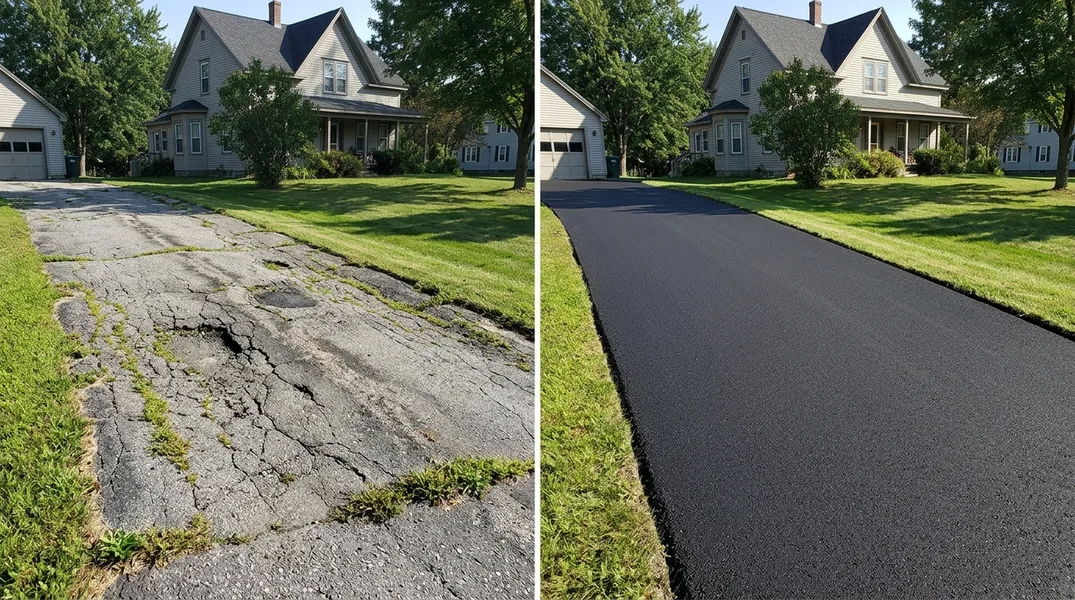
Understanding Frost Heave: Why Bangor Driveways Buckle Every Spring
If you own a home in Bangor, you've likely noticed that your driveway develops new cracks, potholes, and surface damage every spring. This isn't just normal wear and tear. What you're experiencing is called frost heave, a seasonal phenomenon that's particularly damaging in Maine's climate. Frost heave occurs when water trapped in the soil beneath your asphalt freezes during winter, expands, and pushes the pavement upward. When the ice thaws in spring, the soil settles unevenly, leaving behind a damaged, uneven surface.
The culprit behind this cycle is glacial clay, a soil type that dominates much of the Bangor area. Glacial clay has a fine particle structure that absorbs and retains moisture exceptionally well. Unlike sandy or gravelly soils that allow water to drain freely, glacial clay holds water like a sponge. When temperatures drop below freezing, that trapped moisture expands with tremendous force, potentially lifting asphalt by several inches. This repeated cycle of freezing and thawing is one of the primary reasons why driveways in Bangor require more frequent maintenance than those in drier climates.
How Glacial Clay Creates the Perfect Storm for Driveway Damage
Glacial clay was deposited across Maine during the last ice age, and it remains one of the most challenging soil conditions for any structure built on top of it. The problem isn't the clay itself, but rather its interaction with water and freeze-thaw cycles. When rain or snowmelt percolates through your asphalt and into the subgrade, it finds its way into the clay layer. The clay's molecular structure causes it to expand when wet and contract when dry, but the real damage happens when that moisture freezes. Ice has a lower density than water, so it occupies more space. A layer of ice crystals forming in glacial clay can exert pressures exceeding 25,000 pounds per square foot, more than enough to crack and buckle asphalt.
The damage doesn't stop at heaving. Once the ice melts in spring, the soil beneath your driveway doesn't settle back to its original position uniformly. Some areas settle more than others, creating the uneven surface that leads to potholes, cracks, and surface deterioration. This is why homeowners often see dramatic changes in their driveways between March and May. The freeze-thaw cycle repeats year after year, with each cycle worsening the damage. Without proper drainage and a well-constructed base, your driveway is essentially fighting a losing battle against the geology of the region.
Spring Damage: Recognizing the Signs of Frost Heave in Your Driveway
Frost heave damage typically becomes visible in early spring, right after the last freeze. Common signs include large cracks that seem to appear overnight, sections of asphalt that have heaved upward creating a noticeable bump, and new potholes that weren't there before winter. You might also notice that water pools in certain areas after rain, which is a sign that the surface has become uneven. If you see spalling (flaking of the asphalt surface) or widening cracks that follow a linear pattern, these are classic indicators that frost heave has been at work beneath the surface.
The severity of spring damage depends on several factors, including how much moisture was present in the soil before winter, how cold it got, and how long the freeze lasted. A particularly harsh winter combined with poor drainage can cause dramatic heaving. Some homeowners discover that their carefully maintained driveway has developed significant damage in just a few months. This is why many Bangor residents schedule a Driveway Repair inspection in spring rather than waiting until summer. Early detection allows you to address minor issues before they become major problems requiring expensive replacement.
Pothole Repair and Patching: Your First Line of Defense
When spring damage appears, many homeowners wonder whether they should repair individual problem areas or replace the entire driveway. The answer depends on the extent of the damage. If you're seeing isolated potholes or small cracks, Pothole Repair & Asphalt Patching is a cost-effective solution that can extend your driveway's life by several more years. Professional patching involves cleaning out the damaged area, preparing the subgrade, and filling it with fresh asphalt that's properly compacted and sealed. When done correctly, a patched area can last three to five years or longer, depending on how well the underlying soil drains.
However, patching is not a permanent solution to frost heave. It addresses the symptom, not the cause. If your entire driveway is showing signs of heaving, or if you've had to patch the same area multiple times, you're likely facing a situation where the underlying soil conditions are too compromised for simple repairs. In these cases, Asphalt Resurfacing & Overlay might be a better option than spot repairs. Resurfacing involves laying a new layer of asphalt over the existing surface, which can mask minor heaving and provide a fresh, smooth driving surface. This approach is more durable than patching but less expensive than a complete replacement.
Repair or Replace: Making the Right Choice for Your Bangor Driveway
Deciding whether to repair or replace your driveway is one of the most important decisions a homeowner can make. If your driveway is less than ten years old and the damage is limited to a few potholes or cracks, repair is usually the right choice. Pothole Repair & Asphalt Patching can restore functionality and safety relatively quickly and affordably. However, if your driveway is showing widespread heaving, multiple large potholes, extensive cracking, or if you've been repairing the same areas repeatedly, replacement with Asphalt Driveway Paving & Installation is likely the more economical choice in the long run.
When you choose replacement, you have the opportunity to address the root cause of the problem. A professional installation includes proper grading to ensure water drains away from the driveway, installation of a compacted gravel base that resists frost heave better than clay, and quality asphalt that can withstand freeze-thaw cycles. The pricing for a new driveway is higher upfront, but you're investing in a solution that will last 15 to 20 years rather than continuing to patch a deteriorating surface. For homeowners in Bangor dealing with persistent frost heave damage, replacement is often the most cost-effective solution when you factor in the cumulative cost of repeated repairs.
Preventing Future Frost Heave: Drainage and Professional Installation
The best way to combat frost heave is prevention through proper drainage and installation. When Asphalt Driveway Paving & Installation is done correctly, the contractor should create a slope that directs water away from the driveway toward the edges and into drainage swales. A properly installed base layer of compacted gravel, typically four to six inches thick, provides a buffer between the glacial clay and the asphalt. This base layer allows water to drain more efficiently than clay alone, reducing the amount of moisture available to freeze. Some contractors in the region also recommend installing a geotextile fabric between the clay subgrade and the gravel base to further improve drainage.
If you're considering a new driveway or major repairs, it's worth discussing frost heave prevention strategies with your contractor. Ask about the specific soil conditions on your property and whether additional drainage measures are recommended. Regular maintenance also plays a role in prevention. Sealing your asphalt every two to three years helps prevent water infiltration, which reduces the amount of moisture available to freeze and heave. If you're ready to address your driveway's frost heave issues, contact Bangor Asphalt Paving at (207) 605-5037 to discuss your options. We can provide a free estimate and recommend the best solution for your specific situation.
Looking for a professional asphalt paving contractor in Bangor? Bangor Asphalt Paving responds fast for all your asphalt paving needs.
Get a Free Quote